The Complete Guide to Image Optimization for Websites in 2026
Images have become one of the most important elements of modern websites. Whether you run a blog, business website, portfolio, online store, or news platform, images influence how visitors interact with your content. A beautiful image can attract attention instantly, while a poorly optimized image can slow down your website and hurt user experience.
In 2026, website performance is more important than ever. Search engines prioritize fast-loading websites, mobile users expect instant page loads, and businesses depend on visual content to engage their audience. This is why image optimization has become an essential skill for every website owner.
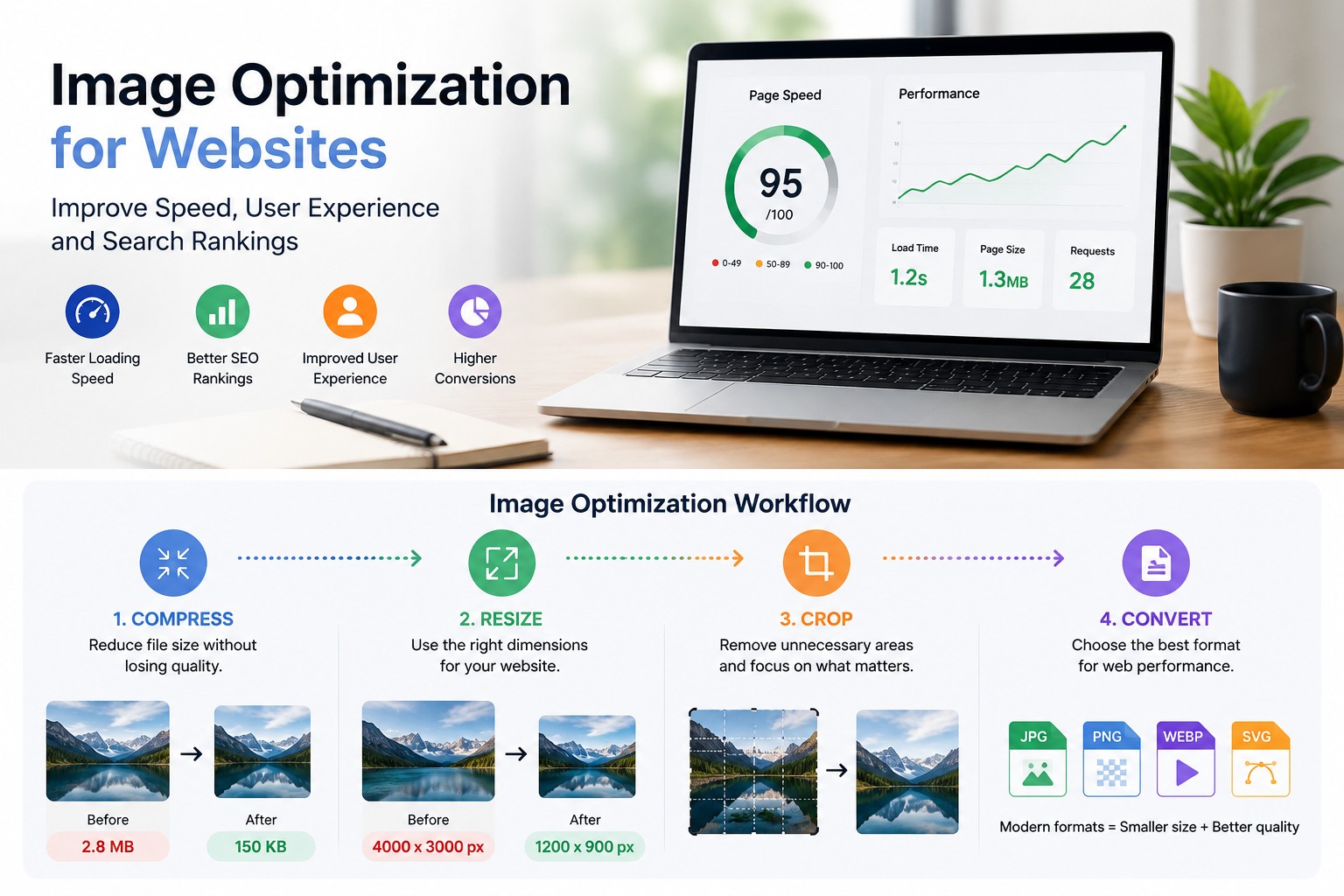
What Is Image Optimization?
Image optimization is the process of reducing image file sizes while maintaining acceptable quality. The goal is to ensure that images load quickly without negatively affecting visual appearance.
Optimized images help improve:
- Website speed
- User experience
- Search engine rankings
- Mobile performance
- Conversion rates
- Server bandwidth usage
Many website owners upload images directly from cameras or smartphones. These files are often much larger than necessary. Without optimization, a few large images can significantly slow down a website.
Why Website Speed Matters
Visitors expect websites to load within seconds. If a page takes too long to load, users may leave before viewing your content.
Website speed impacts:
- Bounce rate
- User satisfaction
- SEO performance
- Ad revenue
- Online sales
Images are often the largest files on a webpage. Optimizing them is one of the easiest ways to improve loading speed.
The Role of Image Compression
Image compression reduces file size without making the image unusable. This process helps pages load faster while preserving visual quality.
If your images are too large, visitors may experience slow loading times, especially on mobile networks.
You can quickly reduce image size using the Image Compressor tool. It helps optimize images for websites, blogs, and social media while maintaining quality.
Benefits of image compression include:
- Faster page loading
- Reduced bandwidth consumption
- Better mobile performance
- Improved SEO signals
- Enhanced user experience
Why Image Resizing Is Important
Many people upload images that are much larger than necessary. For example, uploading a 5000px wide image when your website only displays it at 1200px wastes resources.
Resizing images ensures that dimensions match the actual display size.
The Image Resizer allows users to adjust image dimensions before uploading them to websites.
Proper image resizing can:
- Reduce file size
- Improve loading speed
- Improve mobile performance
- Save storage space
- Enhance page performance
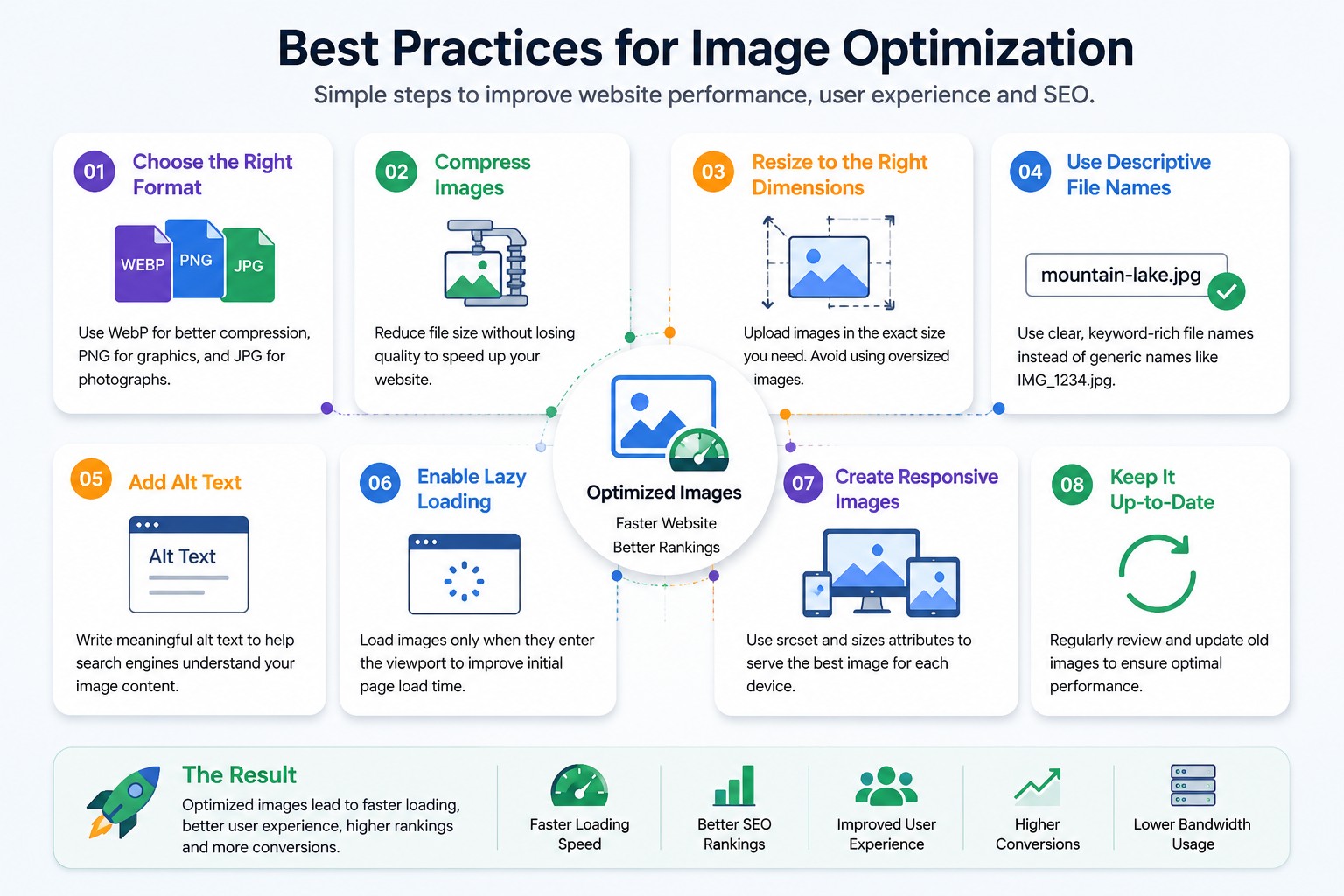
Understanding Image Cropping
Cropping removes unnecessary areas from an image and helps focus attention on the most important subject.
For example, a product photo may contain empty background space that does not contribute to the visual message. Cropping can eliminate distractions and create a cleaner presentation.
The Image Cropper helps users select the most important part of an image quickly and efficiently.
Advantages of cropping include:
- Better visual composition
- Improved user engagement
- Smaller file sizes
- Enhanced focus on subjects
- Professional appearance
Image Rotation and Alignment
Sometimes images are uploaded with incorrect orientation. This commonly happens with smartphone photos.
The Image Rotator allows users to quickly adjust image orientation and ensure proper presentation.
Correct image alignment helps maintain professionalism and improves visual consistency across a website.
Best Image Formats for Websites
JPEG
JPEG is ideal for photographs and complex images. It offers excellent compression and is widely supported.
PNG
PNG supports transparency and provides high-quality graphics. It is commonly used for logos and design elements.
WebP
WebP offers excellent compression while maintaining high quality. Many modern websites use WebP to improve performance.
SVG
SVG files are perfect for icons and vector graphics because they scale without losing quality.
Image SEO Best Practices
Search engines cannot understand images the same way humans do. Website owners should provide additional information to help search engines interpret image content.
Use Descriptive File Names
Instead of uploading image123.jpg, use descriptive names such as:
mountain-landscape-sunset.jpg
Add Alt Text
Alt text helps search engines understand image content and improves accessibility for users with visual impairments.
Use Captions When Relevant
Captions can provide additional context and improve user engagement.
Create an Image Sitemap
An image sitemap helps search engines discover image content more effectively.
Image Optimization for Mobile Devices
Mobile traffic continues to dominate the internet. Optimizing images for smartphones and tablets is essential.
Mobile optimization includes:
- Responsive images
- Proper dimensions
- Compression
- Fast delivery
- Modern image formats
A mobile-friendly website delivers a better experience for visitors and can improve search engine visibility.
Common Image Optimization Mistakes
Many website owners unknowingly make mistakes that affect performance.
- Uploading oversized images
- Ignoring compression
- Missing alt text
- Using incorrect formats
- Uploading blurry images
- Forgetting mobile optimization
- Using excessive image dimensions
Avoiding these mistakes can significantly improve website performance.
Benefits for Bloggers
Bloggers depend heavily on visual content. Images improve readability and encourage visitors to stay longer on articles.
Well-optimized images can:
- Increase page views
- Improve social sharing
- Enhance reader engagement
- Reduce bounce rates
- Support SEO growth
Benefits for E-commerce Websites
Online shoppers rely on images when making purchasing decisions. Product photos influence trust, confidence, and conversion rates.
Fast-loading product images create a smoother shopping experience and can increase sales.
The Future of Image Optimization
As internet speeds improve and image quality increases, optimization remains essential. Websites continue to compete for user attention, and performance remains a key factor in online success.
Emerging technologies such as AI-powered image processing and next-generation image formats are making optimization easier and more effective than ever before.
Website owners who prioritize image optimization today will be better positioned to meet future performance standards.
Conclusion
Image optimization is no longer optional. It is a critical component of website performance, search engine optimization, and user experience.
Whether you need to reduce file sizes using the Image Compressor, adjust dimensions with the Image Resizer, refine compositions using the Image Cropper, or correct orientation with the Image Rotator, taking time to optimize your images can produce significant benefits.
By implementing the strategies discussed in this guide, website owners can create faster, more engaging, and more search-friendly websites that deliver better results in 2026 and beyond.